
A Real Estate Wealth Advisor looks at investment property differently than a property manager. While property managers focus on collecting rent, handling repairs, managing tenants, and maintaining occupancy, a Real Estate Wealth Advisor helps investors evaluate investment property performance, return on equity, tax exposure, exit strategies, estate planning considerations, and long-term wealth-building opportunities.

If you own investment property in Charleston or anywhere else, understanding the difference between a property manager and a Real Estate Wealth Advisor can help you make more informed decisions about your real estate wealth. After all, the goal isn’t simply to own property. The goal is to make sure your real estate continues to support your financial objectives, retirement plans, and legacy goals.
Many investors spend years focused on managing properties.
The better question may be:
Who is helping you evaluate whether you should continue owning them?
Property Managers Manage Properties. Real Estate Wealth Advisors Evaluate Wealth.
Property managers perform an important role. They collect rent, coordinate repairs, oversee tenant issues, manage vacancies, and keep properties operating efficiently.
A Real Estate Wealth Advisor serves a different purpose.
Instead of focusing solely on operations, a Real Estate Wealth Advisor helps investors evaluate:
- Investment property performance
- Return on equity
- Retirement planning implications
- Capital gains exposure
- Estate planning considerations
- Wealth preservation strategies
- Real estate exit strategies
- Asset repositioning opportunities
This distinction is important because many investors spend years optimizing operations without ever evaluating whether the asset itself is still the best use of their capital.
Here are 10 conversations you probably won’t have with your property manager—but they are conversations a Real Estate Wealth Advisor may encourage you to consider.
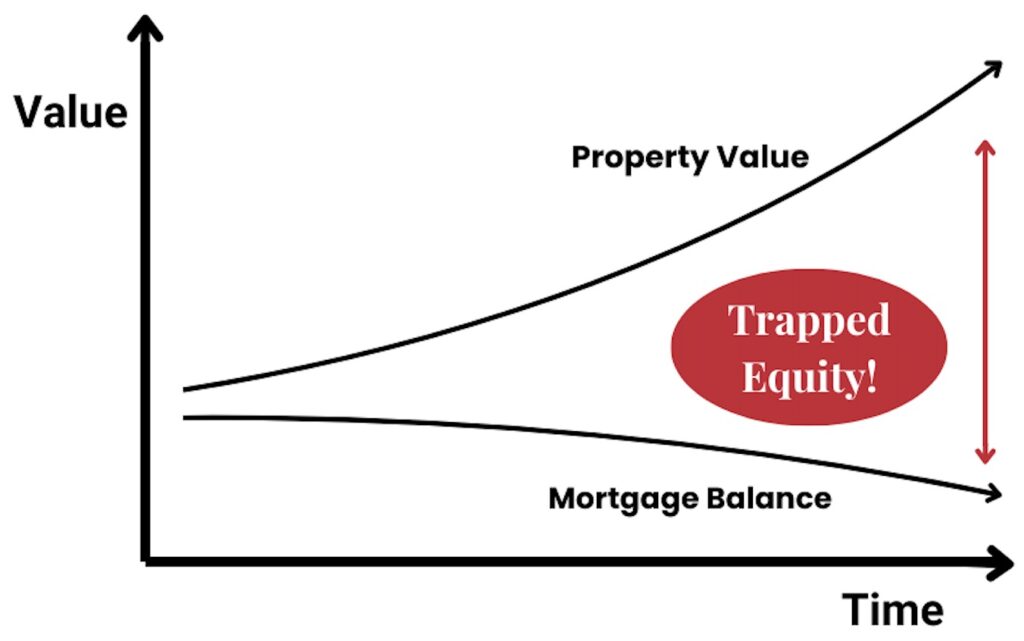
1. Your Property Has Become an Equity Trap
Many investors have accumulated substantial equity over the last decade as property values increased dramatically.
That’s good news.
However, appreciation alone does not guarantee strong investment performance.
A Real Estate Wealth Advisor often encounters situations where investors have hundreds of thousands of dollars…or even millions…of equity trapped inside assets producing relatively modest income.
The question becomes:
Is your equity working as hard as it could?
2. If You Didn’t Already Own This Property, Would You Buy It Again Today?
This may be the most important question in this entire article.
At today’s market value, rents, insurance costs, taxes, maintenance expenses, and interest rates, would you purchase this property again?
Many investors discover the answer is no.
That doesn’t mean it was a bad investment.
In fact, it may have been an excellent investment.
The question is whether it remains the best investment for the next stage of your life.
3. Your Property Value Has Doubled, But Your Income Hasn’t
Across much of the country, and especially in Charleston, property values have increased significantly.

Unfortunately, rents have not always kept pace.
Meanwhile:
- Property taxes increased
- Insurance premiums increased
- Maintenance costs increased
- HOA fees increased
- Contractor costs increased
As a result, many investors are discovering that while their investment property value has increased dramatically, the income it produces has not.
This is one of the most common issues a Real Estate Wealth Advisor encounters when reviewing long-held investment properties.
4. You May Be Taking More Risk Than You’re Being Paid For
Every investment involves risk.
But are you being compensated appropriately for:
- Tenant risk
- Vacancy risk
- Liability exposure
- Deferred maintenance
- Capital expenditures
- Regulatory changes
- Market fluctuations
As investors age, many begin reassessing whether the risks associated with active property ownership still justify the income being generated.
5. Your Equity Could Potentially Produce More Income Somewhere Else
Many investors focus on rent.
A Real Estate Wealth Advisor focuses on return on equity.
These are not the same thing.
The question isn’t:
“How much rent am I collecting?”
The better question is:
“How hard is my equity working?”
This subtle shift in perspective often reveals opportunities investors hadn’t previously considered.
6. You’re Managing a Property, Not a Portfolio
Most investors analyze properties individually.
A Real Estate Wealth Advisor evaluates how each property fits into a larger financial picture.
That includes:
- Retirement planning
- Tax planning
- Estate planning
- Income planning
- Wealth preservation
- Legacy planning
A Real Estate Wealth Advisor helps investors connect real estate decisions to broader financial objectives.
7. The Property Isn’t Underperforming…Your Equity Is
This distinction is important.
The property may be operating exactly as expected.
The issue is that the value of the equity tied up inside the property may have grown dramatically while the income has remained relatively unchanged.
Over time, this can lead to significant return-on-equity compression.
That is why many experienced investors periodically reevaluate whether their capital remains positioned effectively.
8. Your Biggest Problem May Not Be Taxes…It May Be Letting Taxes Keep You Stuck
Many investors continue holding properties primarily because they fear capital gains taxes.
While taxes matter, they shouldn’t become the sole reason for maintaining ownership of an underperforming asset.
This is why many investors seek guidance from a Real Estate Wealth Advisor before making major decisions involving appreciated investment property.
Strategies such as:
- 1031 Exchanges
- Delaware Statutory Trusts (DSTs)
- Wealth repositioning strategies
may provide opportunities worth exploring.
The objective is not avoiding taxes at all costs.
The objective is making informed decisions based on the bigger picture.
9. Your Heirs May Not Want Your Rental Properties
Many investors assume their children will be excited to inherit investment property.
Sometimes they are.
Sometimes they aren’t.
What heirs often inherit is:
- Tenant responsibilities
- Maintenance obligations
- Management challenges
- Capital expenditure requirements
A Real Estate Wealth Advisor frequently helps investors evaluate how real estate fits into their overall estate plan and whether simplifying ownership could benefit future generations.
10. It May Be Time to Become an Investor Again
Many successful landlords eventually reach a point where they no longer want more property.

What they really want is:
- More income
- Less management
- Greater flexibility
- More freedom
- Fewer headaches
Helping investors navigate these transitions is one of the most valuable roles a Real Estate Wealth Advisor can play.
Sometimes the goal is no longer acquiring more assets.
Sometimes the goal is optimizing the assets you already own.
Real Estate Wealth Advisor vs Property Manager: What’s the Difference?
A property manager helps you maximize the performance of a property.
A Real Estate Wealth Advisor helps you determine whether that property still aligns with your overall goals.
Both serve valuable purposes.
The difference is that one focuses on operations while the other focuses on strategy.
Property managers manage properties.
Real Estate Wealth Advisors help investors evaluate wealth.
How a Real Estate Wealth Advisor Evaluates Investment Property Performance
One of the most important questions investors can ask is:
“How is my property really performing?”
The answer requires more than simply looking at rent collected.
A Real Estate Wealth Advisor evaluates:
- Current market value
- Net operating income
- Return on equity
- Future capital expenditures
- Capital gains exposure
- Estate planning implications
- Repositioning opportunities
This broader perspective often uncovers opportunities that traditional property management discussions never address.
Why Every Real Estate Wealth Advisor Should Recommend an Asset Performance Test
The Asset Performance Test was developed to help investors gain clarity about how their investment property is performing today…not how it performed five or ten years ago. It simply allows you to compare asset returns side by side.
The Asset Performance Test evaluates:
- Property value
- Net income
- Return on equity
- Future expenses
- Tax considerations
- Wealth repositioning opportunities
Many investors are surprised by what they discover.
Sometimes the results confirm they should continue holding the property.
Sometimes they reveal opportunities to improve performance, simplify ownership, or reposition wealth.
Either way, clarity leads to better decisions.
Schedule Your Complimentary Asset Performance Test
If you own investment property in the Charleston area and would like a clearer understanding of how your real estate is performing, we invite you to schedule a complimentary Asset Performance Test.
We’ll help you evaluate whether your investment property continues to support your financial goals, retirement objectives, and long-term wealth strategy.
Because the most important question isn’t whether your property was a good investment.
It’s whether it’s still the best investment for the future.
Frequently Asked Questions
A property manager focuses on the day-to-day operation of your investment property, including collecting rent, coordinating repairs, handling tenant issues, and maintaining occupancy. A Real Estate Wealth Advisor takes a broader view by helping investors evaluate property performance, return on equity, tax implications, exit strategies, estate planning considerations, and whether their real estate holdings still align with their long-term financial goals.
Many investors evaluate a property based on rental income or appreciation alone. However, true performance should also consider current market value, net operating income, operating expenses, future capital expenditures, and return on equity. An Asset Performance Test can help determine whether your property’s income and overall return justify the amount of equity tied up in the asset.
An Asset Performance Test is a process used to evaluate how efficiently an investment property is performing. It analyzes factors such as current property value, net income, return on equity, operating costs, tax considerations, and future repair obligations. The goal is to help investors determine whether a property is still supporting their financial objectives or if alternative strategies should be considered.
A 1031 Exchange may allow real estate investors to defer capital gains taxes when selling an investment property and reinvesting the proceeds into another qualifying investment property. While specific rules and timelines apply, many investors use 1031 Exchanges as part of a broader strategy to preserve wealth, reposition equity, and potentially improve investment performance.
A Delaware Statutory Trust (DST) is a real estate ownership structure that allows investors to own a fractional interest in professionally managed institutional-grade real estate. DSTs are often used as a replacement property option in a 1031 Exchange. Many investors explore DSTs as a way to create passive income, diversify holdings, reduce management responsibilities, and simplify ownership while maintaining exposure to real estate.
Investors often consider repositioning their real estate when property income no longer keeps pace with rising expenses, when significant equity has accumulated, when management responsibilities become burdensome, or when retirement and estate planning goals change. Periodically reviewing your real estate portfolio can help determine whether your current holdings remain the best use of your capital.

About the Authors
Bill Byrd and Waverly Byrd serve clients throughout the Charleston area as Real Estate Wealth Advisors, helping individuals and families navigate complex property decisions connected to life transitions and long-term planning. Their work often involves, tax-advantaged 1031 exchanges, probate and estate property sales, divorce-related real estate solutions, trusts, and senior relocation, situations where informed coordination and careful timing can significantly impact outcomes.
With decades of experience, Bill and Waverly emphasize education, clarity, and collaboration. They regularly work alongside financial planners, tax professionals, and attorneys to help clients understand their options and align real estate decisions with broader financial and estate planning goals. As a father-and-daughter team, they guide clients through sensitive transactions with discretion, organization, and a steady, well-informed approach across the Lowcountry.