
Selling a Tenant-Occupied Home in Charleston, SC
How do you prepare for selling a tenant-occupied home in Charleston, SC?
Selling a tenant-occupied home takes more planning than selling a vacant property. You need to respect the tenant’s lease, keep the tenant cooperative, prepare the home properly, and choose a strategy that protects your net proceeds.
Introduction
Selling a tenant-occupied home in Charleston, SC requires a careful balance between the seller’s goals, the tenant’s rights, and the buyer’s expectations. Whether the property is in Downtown Charleston, on Johns Island, Wadmalaw Island, James Island, West Ashley, Mount Pleasant, Kiawah Island, Seabrook Island, Isle of Palms, or Sullivan’s Island, the process starts with planning. You are not just preparing a house for sale. You are also managing a relationship with someone who still lives in the property.
At Byrd Property Group, we have seen how much a cooperative tenant can help the process. We have also seen how stressful it can become when the tenant feels surprised, rushed, or ignored. The right strategy when selling a home in Charleston can improve access, reduce conflict, protect the property’s presentation, and help you make better decisions before going to market.
Why Tenant Cooperation Matters When Selling a Tenant-Occupied Home
The tenant can have a direct impact on how smoothly the sale goes.
A cooperative tenant can help with:
- Allowing reasonable access for showings
- Keeping the home clean for photos
- Making inspections easier
- Reducing scheduling friction
- Helping buyers feel more comfortable
An unhappy tenant can make the process harder. They may limit access, avoid cleaning, resist repairs, or create tension during showings.
That is why the tenant should not be treated as an obstacle. The tenant should be treated as an important part of the plan.
The first step is usually for the owner to notify the tenant that the home will be going on the market. This conversation should be calm, clear, and respectful. Many tenants worry that the home will be sold “out from under them” or that they will have to move immediately.
In most cases, the best approach is to explain that the process takes time. The existing lease should be honored, and the tenant should understand what to expect. You can also explain that many sales take time to market, negotiate, inspect, appraise, and close.
When appropriate, it can also help to offer assistance with finding another rental home.
Review the Lease Before You Make a Plan
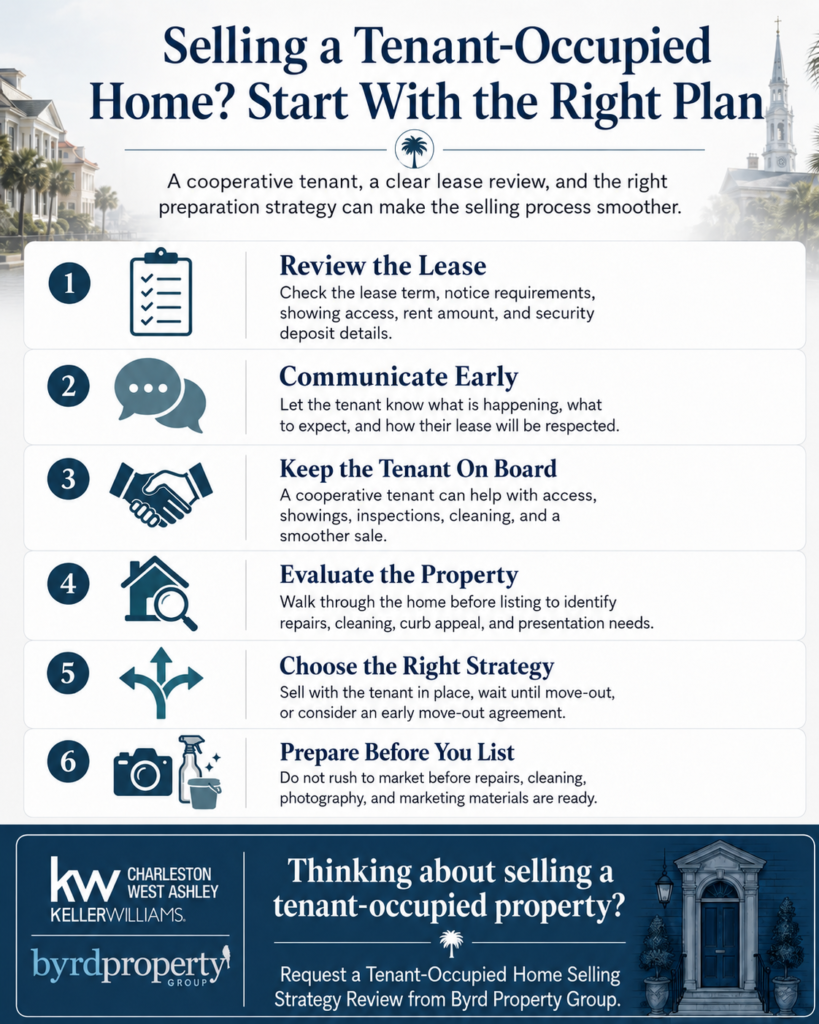
Before you list the property, review the lease carefully.
Look for:
- Lease expiration date
- Monthly rent amount
- Security deposit terms
- Notice required for showings
- Right-of-entry language
- Renewal options
- Early termination language
- Pet terms or access restrictions
- Any clauses related to sale or transfer
- If you have any questions about your lease, review the SC Landlord Tenant Law
- And as always if you have legal, tax, accounting or financial questions seek legal advice from your real estate attorney, your CPA and financial advisors.
The lease helps determine your best strategy. In some situations, it may make sense to sell the home with the tenant in place. In others, the better move may be to wait until the lease ends or negotiate an early move-out.
A tenant-occupied sale is also different because the buyer may inherit the lease. That matters to investors, owner-occupant buyers, lenders, and closing timelines.
Decide Whether to Sell With the Tenant or Wait
There are usually three main options.
1. Selling a Tenant Occupied Home (Tenant in Place)
This may work well if the home appeals to real estate investors.
Benefits may include:
- Rental income from day one
- No vacancy period
- A clear investment story
- Less pressure to move the tenant before closing
However, this approach can narrow the buyer pool. Some buyers want to move into the property themselves. Others may not like the current lease terms, rent amount, or remaining lease period.
2. Wait Until the Tenant Moves Out
This may work better when the home is more likely to appeal to a traditional homebuyer.
Benefits may include:
- Easier showings
- Better photography
- Easier repairs
- Stronger staging options
- More buyer access
The downside is that the seller may lose rental income while the property is vacant.
3. Negotiate an Early Move-Out
Sometimes, allowing the tenant to move early can benefit the seller.
Once the home is vacant, it becomes easier to:
- Bring in contractors
- Make repairs
- Paint
- Clean
- Stage
- Improve curb appeal
- Schedule photography
- Show the home freely
This does not mean every tenant should move early. It simply means the option should be part of the strategy conversation.
How to Prepare the Property Before Selling a Tenant Occupied Home
After the tenant has been notified, the next step is to tour the property.
This walkthrough should focus on condition, presentation, repairs, and pricing impact.
Look closely at:
- Paint condition
- Flooring
- Odors
- Landscaping
- Entryway appeal
- Kitchen and bathrooms
- Deferred maintenance
- Lighting
- Clutter
- Exterior pressure washing
- Safety concerns
- Items that may affect inspection
The goal is not always to make the home perfect. The goal is to decide which improvements are worth making and which ones are not.
Some homes sell best “as is.” Others benefit from cleaning, paint, landscaping, repairs, or a more complete makeover. The key is knowing the difference before you spend money.
One common mistake is improving the wrong things before getting professional guidance. A seller may spend money on updates that do not meaningfully improve value. In other cases, a few simple changes can make the home show much better.
Build the Right Pricing and Marketing Strategy
Pricing a tenant-occupied home requires more than looking at comparable sales.
You should also consider:
- Current rent
- Market rent
- Lease length
- Tenant cooperation
- Property condition
- Showing restrictions
- Investor demand
- Owner-occupant demand
- Timing
- Repair needs
If the rent is strong and the tenant is reliable, the property may appeal to investors. If the rent is low or the lease has a long term remaining, that may affect buyer interest. An investment property performance review may be extremely helpful when attempting understand whether or not real estate investors will be attracted to your property.
The marketing should match the likely buyer.
For investors, highlight:
- Rental income
- Lease terms
- Location
- Property condition
- Long-term potential
- Rental demand
For owner-occupants, focus on:
- When the home can be delivered vacant
- Property features
- Neighborhood appeal
- Improvements
- Lifestyle benefits
In Charleston-area submarkets like Johns Island, Wadmalaw Island, West Ashley, James Island, and Mount Pleasant, buyer expectations can vary by location. A tenant-occupied property near employment, schools, beaches, or strong rental demand may attract a different buyer than a rural home or larger land-based property.
When Selling a Tenant Occupied Home it’s Important to Wait Until the Home Is Ready
One of the most important steps is timing the listing properly.
Do not rush the home to market while repairs, cleaning, painting, or landscaping are still in progress. The first impression matters. Online photos, videos, reels, and listing materials often shape a buyer’s opinion before they ever schedule a showing.
Before launch, the home should be as ready as possible.
That may include:
- Professional cleaning
- Yard cleanup
- Minor repairs
- Decluttering
- Paint touch-ups
- Odor control
- Pressure washing
- Professional photography
- Video or social media assets
- Clear showing instructions
Once the home is ready, the marketing can begin with confidence. The signs go up, the listing goes live, and the strategy moves from preparation to execution.
Frequently Asked Questions When Selling a Tenant Occupied Home
Yes, you can sell a tenant-occupied home, but the lease usually controls the process. The tenant’s rights, notice requirements, and lease terms should be reviewed before listing. Buyers also need to understand whether the tenant will remain after closing.
Not always. If the property appeals to investors, selling with the tenant in place may make sense. If the home needs repairs, staging, or broad owner-occupant appeal, a vacant property may show better. The best choice depends on the lease, condition, rent, timing, and seller goals.
Start with respectful communication. Explain the process early, honor the lease, provide proper notice, and reduce disruption where possible. You may also consider professional cleaning, limited showing windows, or other reasonable incentives to make the process easier.
Not always. A strong tenant paying market rent may appeal to investors. However, limited access, poor presentation, below-market rent, or a long lease can reduce buyer interest. The pricing strategy should reflect the property’s condition, lease terms, and likely buyer pool.
Photos should be taken after the home is clean, organized, and market-ready. Give the tenant advance notice and a simple preparation checklist. If the home cannot be presented well, the marketing strategy may need to be adjusted.

About the Authors
Bill Byrd and Waverly Byrd serve clients throughout the Charleston area as Real Estate Wealth Advisors, helping individuals and families navigate complex property decisions connected to life transitions and long-term planning. Their work often involves, tax-advantaged 1031 exchanges, probate and estate property sales, divorce-related real estate solutions, trusts, and senior relocation, situations where informed coordination and careful timing can significantly impact outcomes.
With decades of experience, Bill and Waverly emphasize education, clarity, and collaboration. They regularly work alongside financial planners, tax professionals, and attorneys to help clients understand their options and align real estate decisions with broader financial and estate planning goals. As a father-and-daughter team, they guide clients through sensitive transactions with discretion, organization, and a steady, well-informed approach across the Lowcountry.
Conclusion
Selling a tenant-occupied home is not something you should rush. The best results usually come from a clear plan, respectful tenant communication, realistic pricing, and proper preparation before the home hits the market.
You need to understand the lease, evaluate the property’s condition, decide whether the tenant should stay or move, and create a strategy that matches your goals.
If you own a tenant-occupied home in Charleston, SC, Byrd Property Group can help you think through your options before you list. A calm strategy session can help you decide what to repair, how to price, how to communicate with the tenant, and how to move forward with confidence.